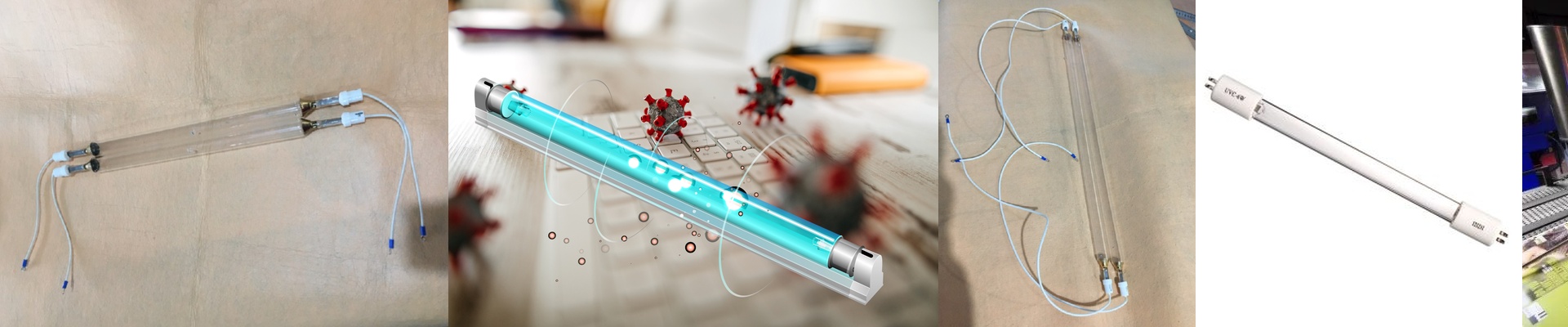
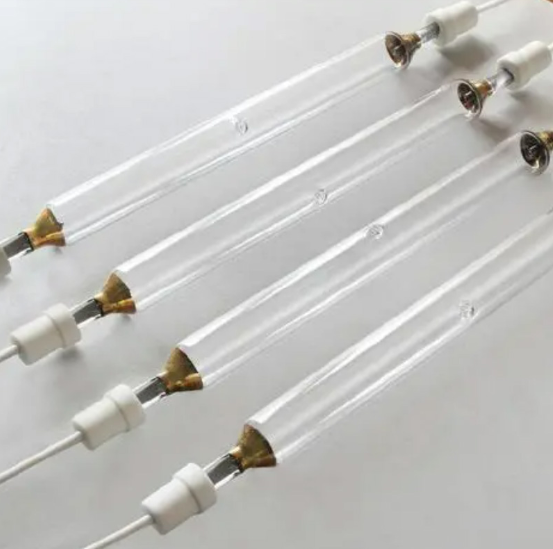
Why a Few Nanometers Actually Matter
We aren’t chasing specific wavelengths just to make a spec sheet look pretty. In the real world of UV lamp manufacturing, being off by even 5 nanometers is a disaster. It’s the difference between a perfect chemical cure and a whole batch of product ending up in the trash. That’s why we obsess over the tight tolerances.
Heat, Gas, and Quartz
Getting the emission spectrum right is a balancing act. You’re juggling gas pressure and electrode materials. Then there’s the quartz. We use high-purity synthetic stuff because it lets the light through. If you use the wrong grade of quartz, the envelope actually absorbs the UV energy it’s supposed to be letting out. The result?It gets hot. When you’re running these at peak wattage, the heat is intense. If your cooling manifolds aren’t up to the task, the lamp is just going to burn out. Simple as that.
The Hard Part
The real headache is the dopant chemistry. We spend a lot of time messing with phosphor coatings and gas mixes to hit those narrow-band peaks. It isn’t a “plug-and-play” situation. We test for spectral drift for thousands of hours. We need to know the output isn’t going to slide the moment you look away.
Getting It Into Your System
If you’re the engineer actually wiring these in, you’re probably thinking about the footprint. We made our connectors easy to swap out so you aren’t staring at downtime for hours. You’ll get a stable photon flux, but do me a favor:watch your ballast. Voltage spikes are electrode killers. Keep your power clean, and these lamps will hold their output. We care about the raw physics of the arc, not the marketing fluff. At the end of the day, the only thing that matters is what the spectral graph tells us.