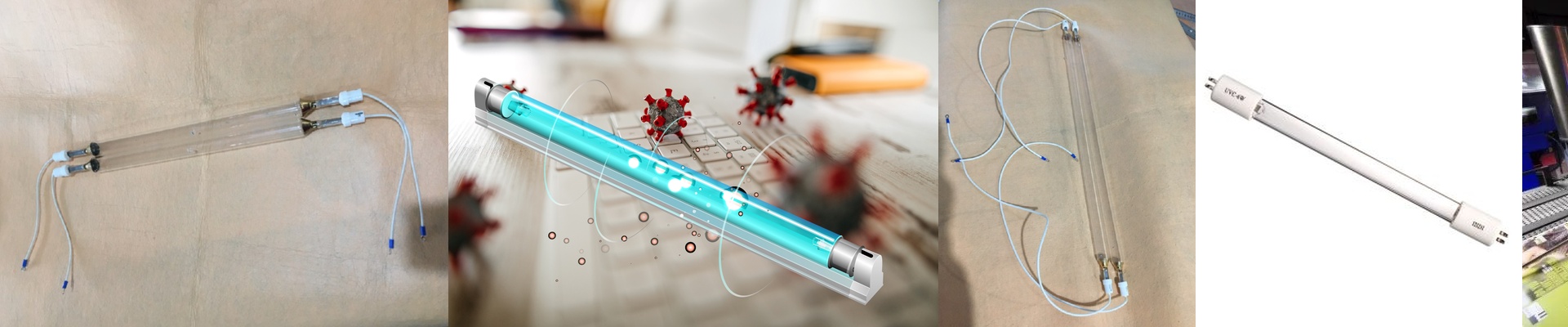
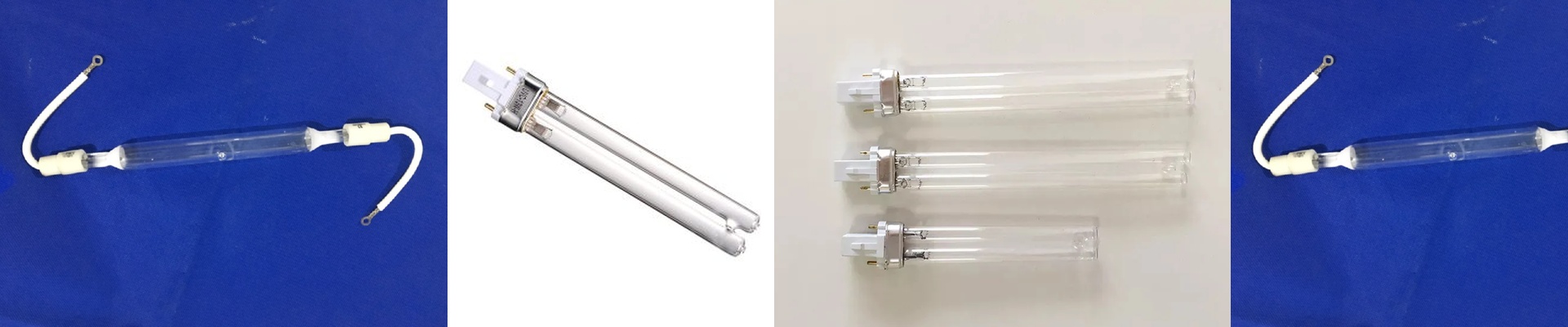
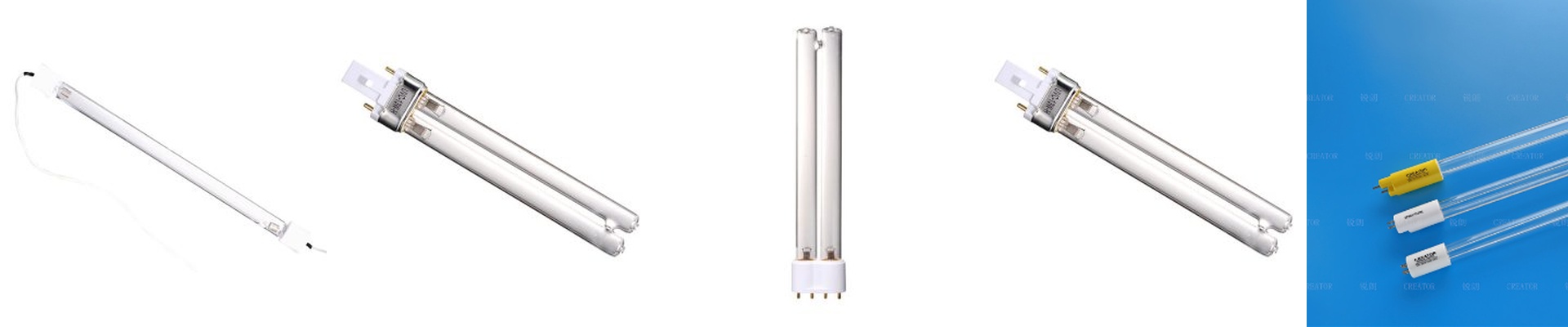
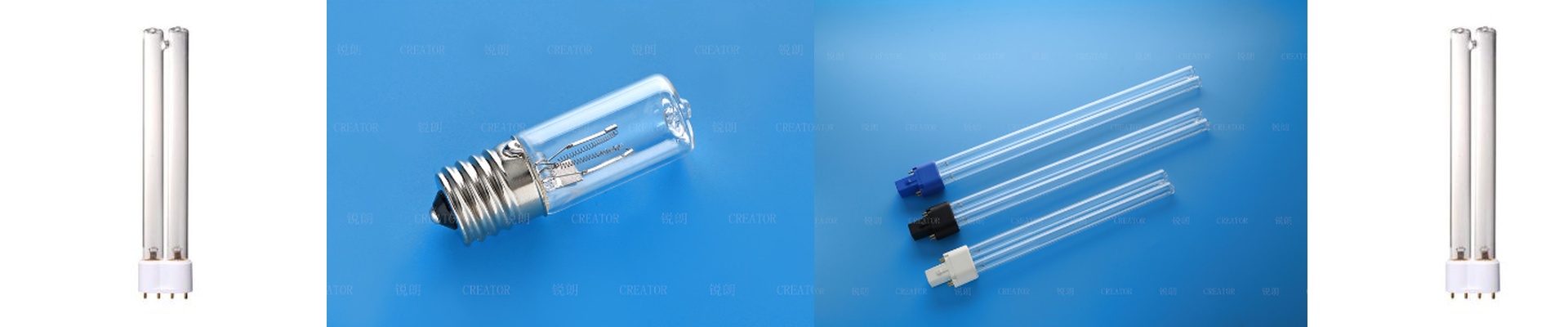
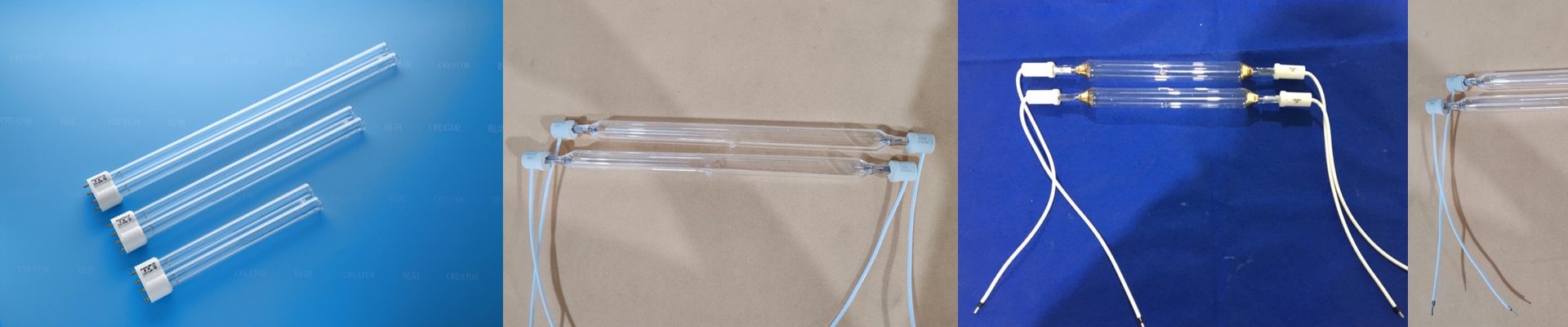
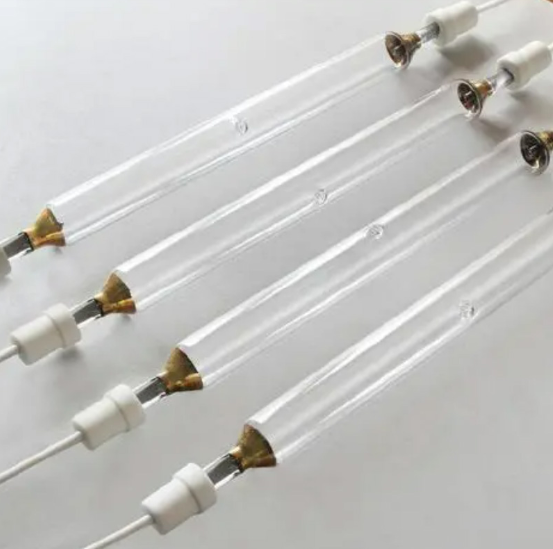
On the KTK elliptical line, that flash-dry station isn’t a “quiet pause.” It’s the beat the whole line runs to. Every micro-stop and restart is a shock to the curing system. If the lamp can’t handle repeated on/off cycles, you’ll start seeing output drift, dose that’s all over the place, and eventually the lamp gives up early. That’s exactly what we built around: a high-intensity UV spot cure that’s engineered for nonstop stop/start duty and real-world industrial life.
What actually matters: output, stability, and how it starts
High-intensity UV spot curing comes down to three measurable things: spectral output, delivered dose, and start/stop behavior. We spec the lamp to match the photoinitiator window of the ink system you’re running. For typical offset/screen inks and adhesives cured with mercury-vapor sources, the main output sits at 365 nm, with extra energy around 385 nm and 405 nm to help with surface cure and through-cure—depending on pigment load and opacity. The reflector stack uses a dichroic coating to shape the spectrum and keep IR heat off the substrate. Peak irradiance is what drives cure speed. In practice, we aim for high peak irradiance at the work plane—often pushing past 1,000 mW/cm² in focused spot setups—because flash curing is about rapid photopolymer cross-linking, not baking things with heat. Dose stability shows up as curing energy density, measured in mJ/cm². On a high-speed flash station, the design goal is repeatable dose delivery within tight tolerance, so color and adhesion don’t wander when line speed changes or the lamp temperature shifts. The spec most people miss in stop/start environments is lamp start behavior. Standard mercury lamps lose efficiency and take time to settle after repeated cold starts. For anti-stop/start reliability, we use a lamp system that keeps arc characteristics stable under frequent cycling: fast ignition, predictable warm-up, and consistent spectral output from the first flash. We also manage electrode thermal mass and power delivery so you don’t get that dip in output right after a restart.
Why it holds up on the KTK flash-dry cycle
KTK elliptical machines need a UV spot cure that acts like part of the press, not some fragile add-on. The stop/start pattern isn’t occasional—it’s frequent, and it’s scheduled. When the machine stops, the lamp shuts down. When the job kicks back on, the lamp has to come up instantly and deliver the same dose. Our custom UV lamp configuration is built around that rhythm. The electrodes and ignitor are matched to take repeated ignition events without burning out faster. The power supply supports rapid restart with a controlled current ramp, so you don’t get current overshoot that shortens lamp life. Reflector geometry and the spot lens are tuned to keep dose uniformity at the cure point, even as the lamp warms and cools. The payoff is curing you can count on under the conditions that kill ordinary lamps. You get consistent adhesion on coated stocks, predictable dot gain control in offset, and fewer rejects from incomplete cure after a restart. Energy use goes down because the system doesn’t waste time re-stabilizing, and the lamp stays in its efficient operating window.
The practical details: compatibility, install, and the real constraint
This isn’t a one-size-fits-all solution. It’s a matched assembly: lamp, ignitor, power supply, reflector, and optics have to be selected as a system. If you run different printing processes, the lamp choice changes because the spectral profile and dose requirements change. Offset applications tend to lean on 365 nm for deeper ink-film cure; flexo and screen can vary with pigment and film thickness, sometimes needing more 385–405 nm contribution for surface cure. For any process—offset, flexo, screen, or gravure—we size the spot size, irradiance, and spectral output to the ink chemistry and substrate, then verify dose with a radiometer at the substrate plane. Installation comes down to thermal management. Mount the lamp with the specified airflow and spacing so the arc tube stays in its rated temperature window. Overheating shortens life and shifts output; undercooling can cause instability. The optics have to be aligned to the cure point—even a small misalignment drops effective dose and creates edge-to-center variability. And here’s the real constraint: high-intensity UV spot curing only performs when the entire optical path is clean. Dust, ink residue, and reflector degradation will cut irradiance faster than the lamp ages. Build in routine cleaning and periodic reflector inspection. In harsh environments, add protective quartz windows and stick to a maintenance schedule. If your KTK line lives on frequent stops and restarts, the curing system has to be engineered for that reality—not just for peak output, but for repeatability under cycling. That’s how you keep flash drying from turning into the bottleneck.